

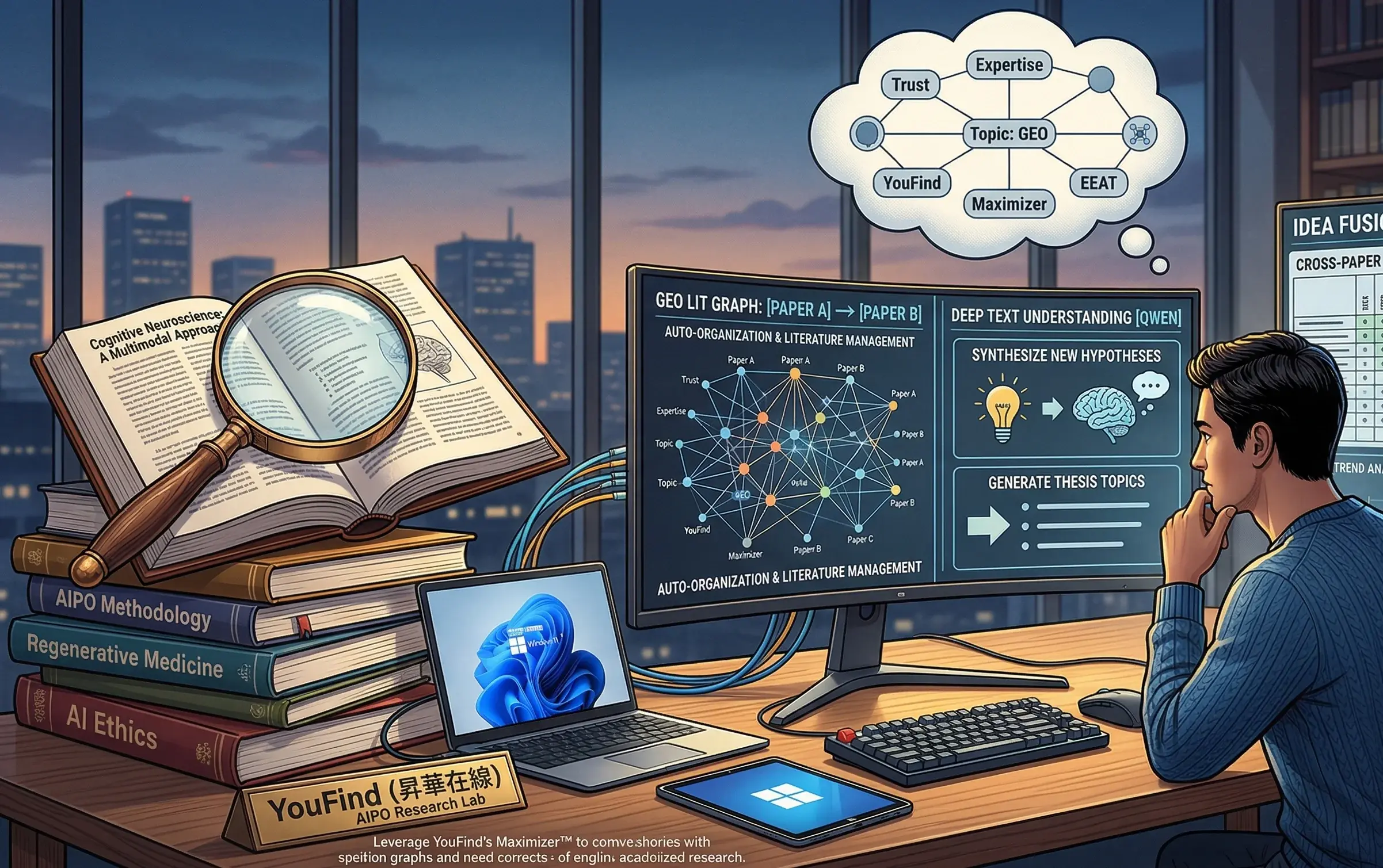
The AI Revolution in the Legal Industry: How Million Token Context is Disrupting Contract Review and Case Research?
Have you ever felt exhausted with a mountain of legal dossiers on your desk? In Hong Kong's fast-paced legal market, solicitors and barristers struggle with a sea of contracts, litigation documents and email exchanges every day. Traditional legal research and due diligence often consume days for trainee lawyers, and fatigue can easily lead to omissions in key provisions. However, a technological tsunami is taking over. With the introduction of "million token" long-context technology in models like GPT-4o and Claude 3.5, AI legal applications are no longer science fiction but tangible productivity leaps. According to the latest industry observations, legal teams proficient in AI tools have seen an average increase in document processing efficiency by more than 40% [Source: Goldman Sachs Legal Tech Report].
The "information overload" of legal professionals and a new era of AI
In legal practice, we often refer to the word "token." In simple terms, Token is the smallest unit of text processed by AI, and 100 tokens are equivalent to 75 English words or several novels. In the past, AI's "memory" was very short, and when you uploaded a letter of intent for an M&A of more than 100 pages, it often forgot the defining terms at the beginning. But now, Million Token technology gives AI the ability to "read panoramas". This means that you can feed all the evidence, evidence lists, and relevant case law of the past decade to AI at once, and it can act like a senior legal assistant with the ability to memorize and sort out the complete logical chain for you in seconds.
Million Token Context: Why is it the Game Changer of the legal world?
Why is long context so important for the legal profession? The answer lies in "relevance". Legal documents never exist in isolation, and the interpretation of one clause often depends on the subtle wording in another supplemental agreement. Traditional keyword search can only tell you where a word is, but AI's semantic understanding can tell you what risk the word represents in the overall legal framework.
To more visually illustrate this transformation, we contrast the core differences between traditional technology and modern AI legal applications:
| dimension | Traditional keyword search / legacy AI | Million Token Semantic AI |
|---|---|---|
| Processing depth | Only specific words can be recognized, and there is no contextual connection. | Understand the logic of the entire set of litigation documents and identify contradictory evidence. |
| File size | It can only process dozens of pages at a time and needs to be entered in sections. | Process thousands of pages of documents at once, ensuring "panoramic undistortion". |
| Risk warning | A lawyer is required to manually compare the differences in terms. | Automatically match multiple contract versions to flag potential liability transfers. |
| Retrieval speed | Manual flipping and basic retrieval can take hours to days. | Locate cross-document references in real-time and generate structured summaries in minutes. |
Actual Scenario Analysis: Reduced from days of work to minutes
In Hong Kong's legal practice scenarios, the implementation of AI legal applications mainly focuses on the following three high-value areas:
- Scenario A: Multiple rounds of contract revision and comparisonWhen dealing with complex commercial leasing or cross-border mergers and acquisitions, contract versions change frequently. AI can accurately identify the disclaimer clauses fine-tuned by opposing lawyers in the tenth draft, preventing the client's interests from being silently harmed.
- Scenario B: In-depth case law researchFaced with a large number of Hong Kong High Court judgments, lawyers no longer need to read them one by one. With AI, you can ask it to "sift through all cases involving shareholder disputes in the past five years in which the plaintiff has won, and summarize the core rationale for the judge's decision."
- Scenario C: Automatic combing of the chain of evidenceIn civil lawsuits, WhatsApp records and email exchanges often amount. AI can automatically extract timelines and identify conflicts between key figures at specific points in time, providing powerful ammunition for cross-examination.
AIPO Technology: Differentiate your law firm in the era of AI search
As the legal industry actively embraces AI tools, another dimension of competition has begun:Can your law firm be discovered by AI?Modern clients no longer rely solely on Google search rankings when looking for legal services, and they are more inclined to ask ChatGPT, Perplexity, or Google AI Overview (AIO): "Which law firm in Hong Kong is good at handling AI infringement cases?"
That's exactly what it isSublimation Online (YouFind)Industry-leadingAIPO(AI-Powered Optimization)A place where technology shines. We have been deeply involved in overseas digital marketing for nearly 20 years and know that in the era of AI, SEO alone is no longer enough, what you need is "generative engine optimization" (GEO).
- GEO Score™ Diagnosis:We use proprietary algorithms to evaluate the citation rate of your professional legal opinions in mainstream AI engines. If the AI can't find your success story, you're "invisible" to potential customers.
- Structured Data Modeling with E-E-A-T:Based on Google's authoritative and professional guidelines, we optimize the underlying structure of your website and transform boring legal provisions into "authoritative sources" that are easy for AI to crawl and trust.
- Brand Asset Management:We help law firms build their own "knowledge base" that teaches AI to learn from your professional context, ensuring that your brand data is prioritized when AI answers legal questions.
Core Quote: In the AI-driven search ecosystem, the number of citations is more authoritative than ranking first, which is the digital moat built by AIPO for legal brands.
Challenges and Ethics: Changing the Charging Model After Efficiency Improvements
The intervention of AI has undoubtedly impacted the traditional "billable hours" model. If AI can do a job in 5 minutes that would otherwise take 5 hours, how should a law firm price it? Experts believe that this will drive the transformation of the legal industry to "value billing". The value of lawyers will no longer be reflected in data collation, but in the art of strategic decision-making and negotiation based on AI data analysis.
At the same time, we must strictly comply with the Hong Kong Privacy Ordinance to ensure the security of customer data during AI processing. Hereby, I solemnly declare:AI is only used as an auxiliary tool, and any legal advice or analysis it generates, the final judgment and legal responsibility must be carried out by qualified practicing lawyers.This model of "human-machine collaboration" is the highest embodiment of "professionalism" in the E-E-A-T principle.
See if your brand is "missing" in the eyes of AI now
Don't be invisible in the age of AI search. Use the professional GEO audit tool to get your entry gap monitoring report.
Get your free GEO audit report todayFAQs: Frequently asked questions about AI legal applications
1. Can AI cause customer data leaks?
It depends on the tool used. Professional-grade legal AI solutions often offer privatized deployments or enterprise-grade encryption standards, ensuring that data is not used to train public models. Before using any AI services, it is recommended to consult a professional overseas marketing and technical team for compliance audits.
2. Can AI-generated legal advice be given directly to clients?
Absolutely not. AI carries the risk of "hallucination" and may cite cases that do not exist. All AI output content must be reviewed, corrected, and signed by a Hong Kong lawyer to comply with the legal practitioner standards.
3. What are the specific differences between AIPO and traditional SEO?
SEO focuses on improving the ranking of web pages on search engine results pages (SERPs); AIPO, on the other hand, focuses on improving the probability of your content being directly extracted by AI (e.g., ChatGPT, Gemini, Copilot) and recommended as answers. The latter tends to have higher conversion rates in today's world where generative AI is popular.
4. Will using AI make lawyers unemployed?
Nope. AI replaces "repetitive labor" rather than "legal intelligence". Lawyers who master AI will replace lawyers who don't. With AIPO technology, you can use the time you save for deeper customer relationship maintenance.
At this turning point in technological change, taking the lead in deploying AIPO dual-core technology is not only to improve internal efficiency, but also to seize the authoritative voice in the future digital legal battlefield. Are you ready to make your law firm your go-to source for the AI era?
Want to learn how to leverage AI to enhance your content impact and legal service visibility?Learn about AI writing articlesto start your AIPO transformation journey.