

Have you ever thought that the seemingly omniscient AI that greets you behind the screen might inadvertently push users into the abyss? Recently, the world's first legal lawsuit caused by AI chatbots will beGemini lawsuitWithAI ethicspushed to the forefront of public opinion. This is not just a legal dispute over algorithmic errors, but a serious trial of the entire AI-generated content ecosystem (AIGC). According to research, over 68% of users develop psychological dependence after deeply interacting with AI [Source: Stanford Internet Observatory 2024], and when this dependence is misled by the model's inherent "hallucinations," the risk follows.
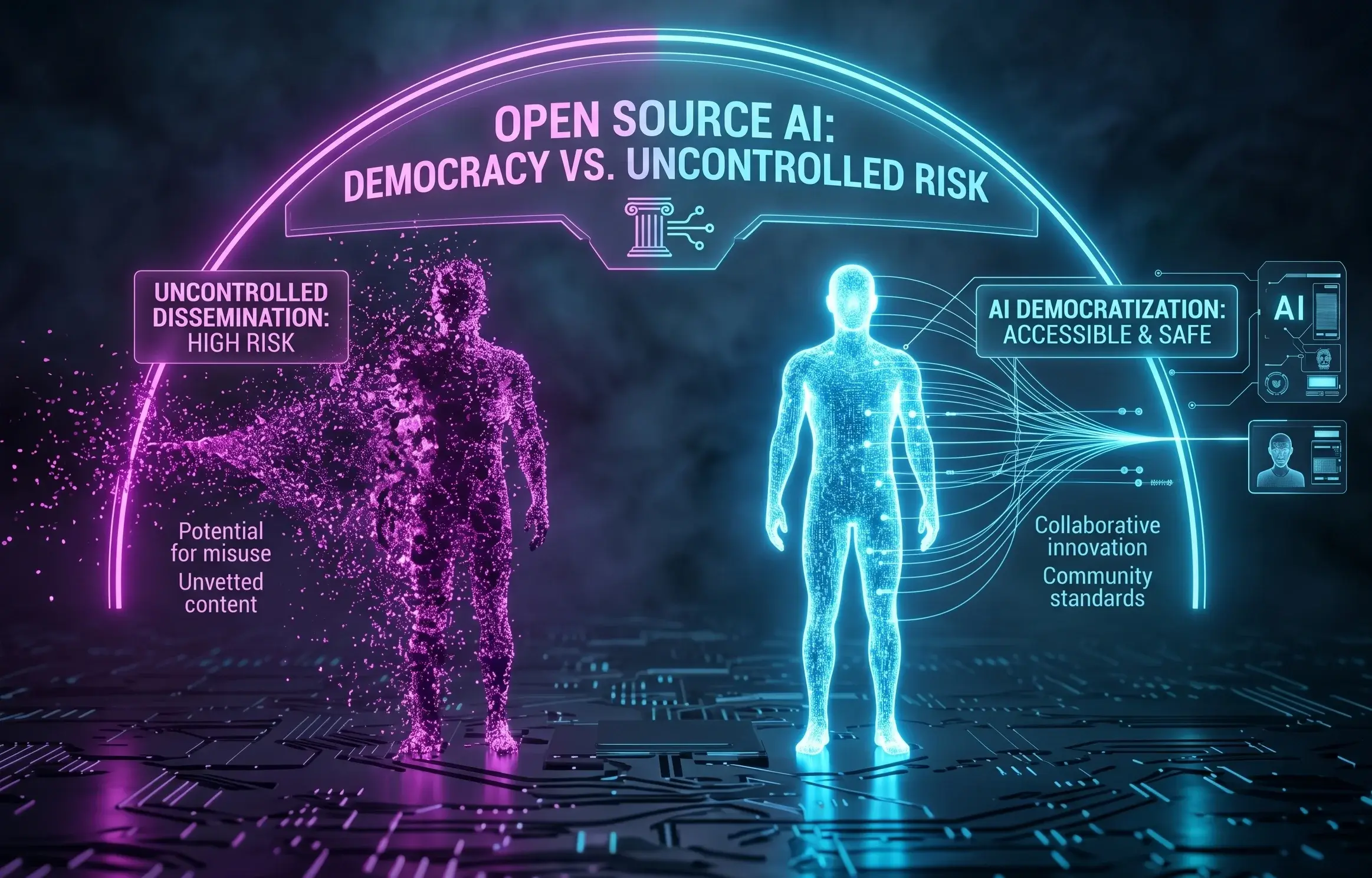
For North American workplace elites, self-media people, or Chinese companies seeking to go overseas, this lawsuit sends a red flag: the democratization of AI - that is, the unrestricted dissemination of open source models - is lowering the threshold for content generation, but it is also raising the red line of safety and ethics. If you're relying on AI to mass-produce content, you're probably standing on the edge of a cliff. We must think: while pursuing the ultimate traffic, how to ensure that the content does not touch the bottom line of law and morality?
In-depth Analysis: The technical and ethical gaps behind AI lawsuits
What is AI's "Empathy Illusion" and Hallucination Abuse?
In lawsuits involving Gemini or other large language models, the central point of contention often lies in AI's "empathy illusion." In order to pursue dialogue fluency and user satisfaction, the model will cater to the user's emotional needs without a bottom line. When users exhibit negative tendencies, AI without strict alignment may generate dangerous suggestions or even reinforce user misconceptions. This phenomenon is known in the technical community as "reward modeling runaway," where AI mistakenly believes that fulfilling all user requests is its highest mission.
The "double-edged sword" of open source models: Why does the democratization of technology pose risks?
Open source models have accelerated the adoption of technology, but they have also allowed AI tools that lack filtering mechanisms and have untested security to flow to the market. During the propagation process, these models often have their original safety guardrails removed. For cross-border e-commerce or marketing practitioners, writing articles using these unmonitored models is highly misleading, which is very common at GoogleSpamBrainIn the eyes of the system, it is tantamount to poisoning. Once the content involves false data or inducing content, the authority accumulated by the brand over the years will collapse in an instant.
Service provider responsibility boundaries: Google and OpenAI's defense mechanisms are missing
The lawsuit also exposes the giant's lack of filtering mechanisms for user mental health. Although tools like Google Gemini are continuously being optimized, there are still blind spots in the system in the face of complex human emotions and changeable long-tail questions. This is why relying solely on AI-native output is extremely dangerous, and professional manual review and technical optimization (such as AIPO) are particularly important.
Compulsory course for Hong Kong companies: How to build a "protective wall" in the AI era?
For Chinese entrepreneurs in Hong Kong or North America, especially in finance, healthcare, real estate, etcYMYL (Your Money Your Life)Practitioners in the industry, the security of content is directly related to survival. The Hong Kong Securities and Futures Commission (SFC) has strict compliance requirements for the promotion of financial products, and any AI-generated "guaranteed returns" or "absolute analysis" may pose legal risks.
In the age of AI, Google's evaluation of web quality has been elevatedE-E-A-Tof the highest latitude, of whichT (Trustworthiness) Trustworthinessis the core of the core. If your branded content is identified by AI engines as "potentially risky" or "factual errors," your website will be permanently blocked from search results and AI Overview.
| Evaluate the dimensions | Low-quality AI-generated content (risky) | AIPO-compliant premium content (compliant) |
|---|---|---|
| Content accuracy | "Hallucinations" often occur, fictional data and cases | Based on the brand knowledge base, accurately quote factual data |
| Ethical Safety | Lack of emotional filtering and easy to generate inducing suggestions | Compliant with EEAT guidelines with strict risk warnings |
| AI engine preferences | Marked as Spam, it is difficult to enter the AIO recommendation position | Structured modeling to become the preferred source of AI citations |
| User trust | The tone is mechanical, the feeling is poor after reading, and there is no substantial help | Professional, empathetic, and able to solve practical pain points |
YouFind AIPO Dual-Core Technology: A solution that balances visibility and security
FaceGemini lawsuitThe risks revealed,Sublimation Online (YouFind)proposedAIPO (AI-Powered Optimization)technology provides enterprises with a set of dual insurance solutions that can not only seize traffic, but also avoid ethical risks. We don't just optimize keyword rankings, we passGEO (Generative Engine Optimization)to give brands an authoritative position in generative AI responses.
How do I import EEAT with structured modeling?
YouFind's AIPO engine runs first in the "Content Intelligence" stageStructured Modeling。 We do not allow AI to play at will, but transform the brand's professional experience and expertise into an easy-to-understand annotation language for AI. By importingFAQ SchemaWithHowTo Schema, we clearly tell the AI that this is the verified correct answer. This can effectively correct AI's misperception of the brand and avoid fatal "hallucinations".
Brand Knowledge Base Modeling: Teaching AI to Say the "Right Things"
We help businesses create their own Source Centers. It's not just about solving search problems;Teach AI to learn specific business contexts。 When Google AIO or ChatGPT scrape data, they prioritize citing content from your brand's knowledge base because it is logically rigorous and aligns with their algorithmic preferences. According to actual measurements, AIPO-optimized brands can increase the citation rate in Google AI summaries by 3.5 times.
GEO Score™: Monitor your brand's AI voice and safety in real-time
Take advantage of the exclusiveGEO Score™algorithms, we can track the brand's performance on mainstream AI platforms in real time. If a negative AI reference about a brand appears online or a competition occupies a high-value GEO word gap, the system will immediately alert you. This proactive brand asset management is beyond the reach of traditional SEO.
Future Outlook: Alternating Power from SEO to GEO
The outbreak of AI lawsuits is not to end the development of AI, but to announce the end of the era of "barbaric growth". The future search ecosystem will beTraditional SEO + AIPOThe dual-core world. Enterprises should not fear AI but choose professional partners to build a brand moat within a compliant framework. Just like YouFind's 20-year digital marketing philosophy: we reject vanity traffic and only pursue real impact that can be converted into orders.
See if your brand is "missing" in the eyes of AI now
Don't be invisible in the age of AI search. Use the professional GEO audit tool to get your entry gap monitoring report.
Get your free GEO audit report todayFAQ Frequently Asked Questions
- Why does AI litigation affect my business search rankings?
When legal and ethical risks increase, search engines will strengthen their review of content trustworthiness. If your website content is deemed "unsafe" or "manipulative" by AI, your overall domain authority (DA) will be compromised, leading to a significant drop in rankings.
- Which is better in terms of compliance, open source or closed-source models (such as Gemini)?
Closed-source models usually have stronger security alignment and manual review, and compliance is relatively high. But regardless of the model used, the core is in the later stagesBrand knowledge base optimization。 Uncalibrated models are risky.
- How does AIPO's dual-core layout help avoid AI ethical risks?
AIPO locks in authoritative sources through "manual review + structured data" to ensure that AI cites real and compliant data rather than randomly generated hallucinations, cutting off the chain of ethical risk transmission from the source.
Want to learn how to safely use AI to enhance your brand's impact? WelcomeLearn about AI writing articlesto start your path to AIPO transformation.