

The New Battlefield of the Sino-US AI Race: From Model Performance to the Agentic Ecosystem, Who Is Gaining the Upper Hand?
If you're still struggling with ranking on the first page of Google search results, you may have slowed down a beat in the digital business battlefield of 2026. The competition is no longer just about keyword stacking, but whether your brand can appear in the summary of Google AI Overview or become the preferred citation source for ChatGPT and Gemini when answering user questions. The AI competition between China and the United States has officially entered the second half of the competition between "application implementation" and "Agentic ecology" from a simple underlying model "arms race".
For business owners, engineers, and marketing professionals in North America, Hong Kong, or looking to go overseas, a cold reality lies in front of you: no matter how good your product is, if the AI engine doesn't "know" you or "trust" you, your visibility in the eyes of potential customers will be close to zero. In the face of the changes of giants such as GPT-5.4 and GLM-5, we must not only watch the excitement but also see how brands can build a moat in the AI era.
What is the "post-model era" paradigm shift in the Sino-US AI competition?
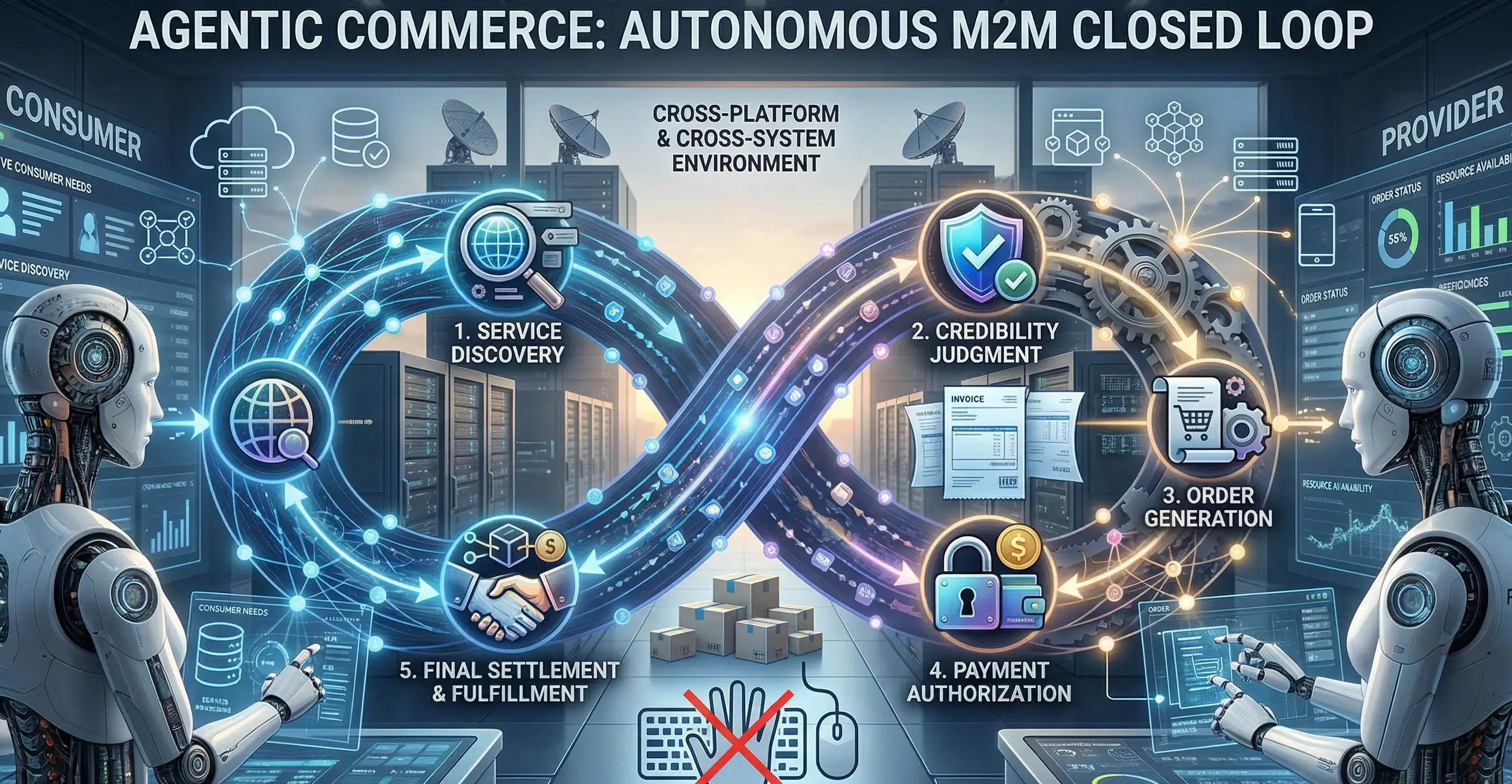
In the past two years, we have witnessed the leap from 100 billion to trillion scale of model parameters. However, by 2026, the industry consensus has shifted: the mere model "running score" is no longer the only indicator that determines victory or defeat. The real focus of competition has shiftedAgentic Workflow。 This means that AI is no longer just a dialog box, but a digital employee who can actively disassemble tasks, invoke tools, and execute decisions.
Under this paradigm shift, the challenges faced by enterprises have escalated. When a user asks, "Which Hong Kong financial institution has the most professional compliance services?" The AI system will instantly retrieve high-weight sources across the network and give conclusions. That's exactly what it isYouFind (Sublimation Online)proposedAIPO (AI-Powered Optimization)- Ensure that your brand is not only present but also authoritative when AI makes decision-making recommendations.
What do you think of the performance game between GPT-5.4 and GLM-5?
At the technical level of AI competition between China and the United States, the two sides present completely different evolution paths. According to the latest technology evaluation, this difference determines the strategic direction of enterprises when choosing AI-enabled tools:
- US Representative (e.g., GPT-5.4 / Claude 4.6):It still maintains a leading position in multi-modal logical reasoning and long text processing. They are more like a "generalist" who knows both ancient and modern times, with unparalleled authority in creative ideation, complex algorithm writing, and the global open source ecosystem.
- Chinese representatives (e.g. GLM-5 / Qwen 3.5):It has demonstrated strong explosive power in terms of in-depth understanding of the Chinese context, adaptability to specific industries (such as medical and financial regulation), and on-device operation efficiency. Chinese companies are catching up with "vertical application scenarios" at an astonishing speed, especially in terms of e-commerce agents and O2O integration capabilities, which are often more down-to-earth than their American counterparts.
For cross-border e-commerce and brand overseas users, this means that the "dual-track layout" has become crucial. You need to optimize the AI citation rate for the English context and take into account the brand voice of the Chinese AI ecosystem.
Why is the Agentic ecosystem the decisive point for enterprise application implementation?
The rise of AI Agents marks the evolution of AI from "answering questions" to "solving problems". In the business landscape in Hong Kong and North America, this transformation is revolutionizing the impact:
- Transformation in the Financial Industry:Traditional compliance checks and risk assessments require extensive manual review of documents. Now, AI Agents embedded in a library of expertise can complete the initial review in seconds and provide recommendations for compliance with regulatory requirements.
- Personalization of real estate and beauty:AI no longer just says "hello", it can proactively recommend matching real estate or beauty plans based on the user's budget, preferences, and even past skin conditions, and directly complete the appointment registration.
The advantage of the United States lies in strong developer toolchains (such as LangChain), while China excels in scenario-based implementation supported by strong supply chains. If companies want to get a piece of this wave of dividends, the core is not about developing self-developed models, but about how to "feed" brand data to these agents and make them your volunteer salesmen.
How to Leap from SEO to GEO: The Power of AIPO Dual-Core Layout?
Traditional SEO focuses on click-through rates for blue links, but in the era of generative search (Google AIO, Perplexity), this is no longer enough.GEO (Generative Engine Optimization)came into being. It's a battle for AI's "brain memory". YouFind's AIPO engine is designed for exactly this:
We found that many companies are most afraid of "tearing down and starting over" when transforming. owned by YouFindMaximizer patented systemThis pain point is solved - customers do not need to rebuild the website, and can optimize the underlying code and content structure without changing the web page structure. This technical method can efficiently increase the authority of web pages, making them easier to crawl and identify by AI crawlers.
In addition, through exclusiveGEO Score™ algorithm, we can accurately diagnose the brand's "presence" on major AI platforms. It will tell you: In a discussion about "high-end overseas marketing," the AI cited your competitors 10 times, while they only quoted you 2 times. This "entry gap monitoring" is a key map for brand counterattacks.
Dimensional comparison of SEO vs. GEO
| Features | Traditional SEO (Search Engine Optimization) | GEO (Generative Engine Optimization/AIPO) |
|---|---|---|
| Core Objectives | Search Results First Page Ranking (SERPs) | AI summary citations and agent recommendation bits |
| Assessment indicators | Click-through rate (CTR), keyword ranking | Brand Mentions, Share of Voice |
| Content logic | Keyword overlay vs backlinks | E-E-A-T Specialization and Structured Modeling |
| Technical focus | Website speed, mobile adaptation | Schema markup, knowledge base modeling, source authority |
How to execute the AIPO engine's "Content Intelligence" tetralogy?
For AI to trust your brand, content creation must meet Google's most stringent standardsE-E-A-TGuidelines. We standardize this process into four stages of intelligence, ensuring that every piece of content has the potential to be labeled as a "definitive answer" by AI:
- Data Collection:Instead of writing blindly, we first use tools to automatically scrape the citations of mainstream AI platforms for specific issues, analyze competitors' content paths, and find the distribution of high-weight sources.
- Deep Analysis:What kind of paragraph structure does AI like? We break down audience needs and target the authoritative expressions that are most easily extracted by AI as "featured snippets."
- Strategic Conception:Combine the unique advantages of the brand with the user's click incentives to generate a set of headlines and content strategies that not only align with the algorithm's preferences but also hit the user's pain points.
- Structured Modeling:This is the most critical step. We import content into structured markup (such as FAQ Schema) and enhance the "Experience" and "Expertise" dimensions to transform your branded content into an AI-first source center.
Through this process, we have helped our clients increase their citation rate in Google AI summaries by 3.5 times and increase the number of genuine inquiries overseas by 22%.
How to build a lasting brand equity in the age of AI?
Behind the smoke of AI competition between China and the United States is the reconstruction of global business logic. For entrepreneurs, the most dangerous action now is to "wait and see". Creating brand-specific "knowledge base modeling" to teach AI to learn your business context is the only way to ensure that your brand is not erased in the next decade.
Whether facing the rational logic of GPT-5.4 or the local insights of GLM-5, the core competitiveness always comes from your contentT (Trustworthiness) Trustworthiness。 Using data-driven optimization strategies and technical tools like Maximizer that do not require architectural changes can we open up our own brand overseas in the two-way attack of AI between China and the United States.
See if your brand is "missing" in the eyes of AI now
Don't be invisible in the age of AI search. Use the professional GEO audit tool to get your entry gap monitoring report.
Get your free GEO audit report todayFrequently Asked Questions (FAQs) on AI Competition and Brand Optimization in China and the United States
1. What specifically distinguishes AIPO from traditional SEO?
Traditional SEO focuses on search engine sorting rules aimed at getting clicks; AIPO (AI-Powered Optimization) focuses on the "citation logic" of generative engines. AIPO not only competes for rankings but also ensures that the AI tags and recommends your brand content as core evidence when generating responses. In simple terms, SEO makes you seen, and AIPO allows AI to recognize and recommend you.
2. Why does the financial or medical industry need more rigorous E-E-A-T optimization?
In AI algorithms, finance and healthcare fall under the realm of YMYL (Your Money Your Life), directly impacting users' wealth and health. AI engines are extremely strict in their review of this content. If the content lacks clear expert background, authoritative cited data, or honest security claims, the AI will refuse to cite the information for a hedge against risk. Therefore, in-depth professional modeling through AIPO is the foundation of this type of industry.
3. If I already have a stable website, do I need to rebuild it to adapt to AI?
No, you don't. That's exactly what YouFind isMaximizer patented systemThis is where the advantage lies. We can optimize the underlying data structure through technical means to align with the crawling preferences of AI crawlers without altering your existing web architecture and design. This can save enterprises a lot of development time and costs, and achieve inductive upgrades. If you want to know more details about content intelligence, welcomeLearn about AI writing articlesand its contribution to GEO.