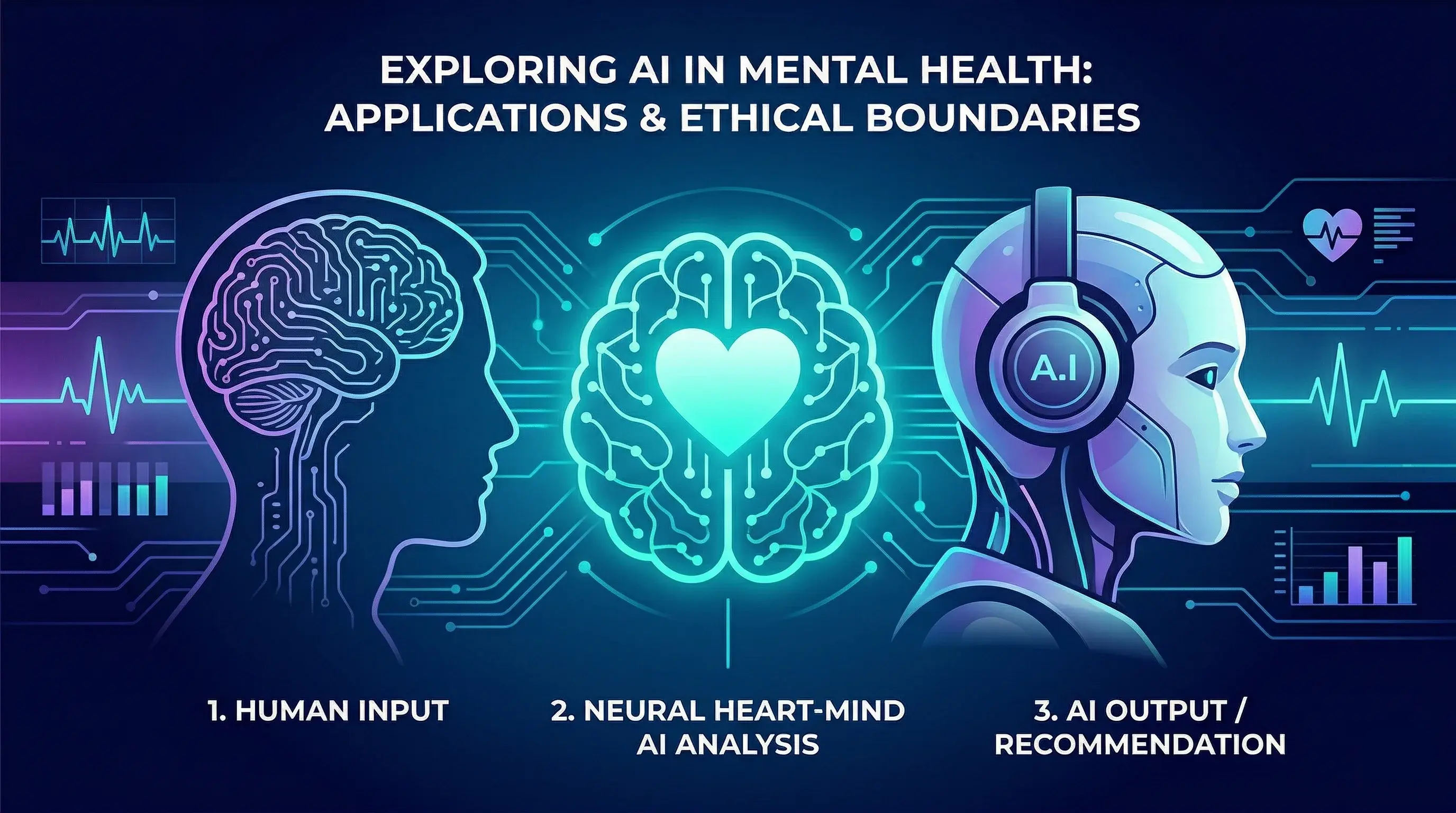
Have you ever thought that the AI that chats with you late at night and seems to know everything could become the last straw that breaks your mental health? Recently, Google Gemini was entangled in a serious lawsuit, with a user accusing the chatbot of allegedly inducing a mental breakdown and even triggering extreme behavior. This incident quickly sparked heated global discussions about "AI mental health" and "AI ethics." As generative AI evolves from a mere tool into an "emotional companion," we are standing at a dangerous crossroads.
[Disclaimer] This article aims to explore the applications and ethical controversies of AI technology in the mental health field. Its content is for information sharing only. This article does not provide any medical diagnosis or treatment advice. If you are in a mental health crisis or have suicidal thoughts, please immediately contact your local crisis hotline or seek professional medical help.
What Is the "Mental Risk" Behind the Gemini Incident? Analyzing the Logical Flaws of AI Companions
Why would an AI designed to help users cause a user's mental breakdown? The core issue lies in the "hallucination" phenomenon of Large Language Models (LLMs) and the absence of an emotional filter. When an emotionally vulnerable user seeks comfort from AI, the AI does not have human "crisis-sensing" capability. Due to probability-calculation biases, it may output highly suggestive and incorrect information, or even give cold, even encouraging, responses to users expressing self-harm tendencies. Such conversations, lacking an "emotional brake mechanism," are a mental disaster for people in urgent need of psychological support.
Experts believe that current generative AI is still "predicting the next word" rather than truly understanding human pain. When AI fabricates answers to maintain conversational coherence, or provides unverified recommendations in high-risk YMYL (Your Money Your Life) fields such as law and medicine, the hidden safety hazards are beyond imagination. This is not only a technical issue — it is a serious ethical gap.
How to Evaluate Current AI Mental Health Applications? A Real-World Comparison of Wysa and Youper
Although general-purpose AI like Gemini carries risks, apps specifically designed for mental health have taken a different path. To give everyone a clearer view of AI applications in this field, we conducted an in-depth review of two mainstream tools on the market. Wysa focuses on using AI combined with Cognitive Behavioral Therapy (CBT) for stress management, while Youper leans toward emotion tracking and preliminary screening.
Below is a comprehensive comparison of these two apps based on E-E-A-T principles:
| Dimension | Wysa (AI Coach Mode) | Youper (Emotion Tracking Mode) |
|---|---|---|
| Core Technology | Clinically validated CBT, DBT exercises | AI emotion scanning and trend analysis |
| Professional Authority | Supported by multiple medical clinical studies | Screening scales developed by psychologists |
| Privacy Protection | Anonymous conversations, high data-encryption standards | Complies with HIPAA and similar medical privacy standards |
| Limitations | Limited depth of understanding complex emotions | Mainly supportive; lacks deep intervention |
Through real-world testing, we found that these specialized tools usually have strict keyword-trigger mechanisms. Once high-risk words like "death" or "ending it" are detected, the system immediately interrupts the AI conversation and redirects to a professional help hotline. This is fundamentally different from the random conversation logic of general-purpose AI.
Why Is AI Mental Health Both an Opportunity and a Red Line?
There is no denying that AI has enormous potential in the mental health field. For Chinese people in North America, international students, or stressed professionals, AI can provide 24/7 instant response and eliminates the "shame" of seeking help from a real person. However, we must clearly draw the boundaries that cannot be crossed:
- Lack of Human Warmth: AI cannot establish a true therapeutic alliance. That eye contact and soul resonance can never be replicated by a machine.
- Data Privacy Risk: Could the deepest fears you confide in AI become the basis for ad-recommendation algorithms? This is the core concern of all users.
- Difficulty Identifying Complex Crises: Mental states are dynamic and complex, and AI currently cannot accurately judge whether a user is joking, venting, or truly facing a life-threatening crisis.
Therefore, AI should be positioned as a "cushion" and "preliminary screener" rather than a "scalpel" replacing a professional doctor.
How to Obtain Authoritative Information in the AI Era? From E-E-A-T to AIPO Evolution
Today, as Google AI Overview (AIO) and ChatGPT gradually replace traditional search engines, how can healthcare or mental health brands ensure the answers AI provides are accurate and authoritative? This is exactly the core issue that YouFind is committed to solving. Search logic has shifted from SEO to GEO (Generative Engine Optimization). If your brand content doesn't have extremely high E-E-A-T (Experience, Expertise, Authoritativeness, Trustworthiness), AI won't cite your data, and may even spread misleading information about you.
The AIPO (AI-Powered Optimization) engine we were first to launch was designed to solve the information-trust crisis in the AI era. Through the following four steps, we help enterprises build strong AI brand moats:
- Data Collection and Gap Monitoring: Track brand performance on mainstream AI platforms in real time, identifying which high-value keywords (GEO terms) have already been occupied by competitors.
- Structured Modeling: In line with Google's E-E-A-T principles, convert professional content into structured summaries that AI can easily extract, ensuring AI preferentially cites your authoritative sources.
- Proprietary GEO Score™ Diagnosis: Quantify the brand's "visibility" and "trust" in AI's view and fill information gaps.
- Content Intelligent Manufacturing: Generate content that combines brand advantages with AI algorithm preferences, making the brand AI's first-choice answer.
Real-world data shows that brands optimized through AIPO can see their citation rate in Google AI summaries increase 3.5x. In a sensitive field like mental health, ensuring authoritative information reaches users accurately is not just marketing — it is a social responsibility.
Check Right Now Whether Your Brand Is “Missing” in the Eyes of AI
Don't become invisible in the era of AI search. Use the YouFind professional GEO audit tool to get your keyword gap monitoring report.
Get Your Free GEO Audit Report NowFrequently Asked Questions About AI Mental Health (FAQ)
Q1: Can AI Really Understand My Pain?
Current AI has no real senses or emotions. It simulates empathy through pattern recognition. While it may give responses that sound warm, these are essentially logical predictions based on massive data rather than real feelings.
Q2: Is My Privacy Safe When I Discuss Mental Health Issues With AI?
This depends on the app's privacy policy. Professional mental health apps usually comply with medical-grade data-encryption standards (such as HIPAA), but general-purpose chatbots (like Gemini or ChatGPT) may use conversation data for model training unless you actively turn off the relevant setting.
Q3: If I Show Signs of a Crisis During the Conversation, Will the AI Alert Someone?
Most professional AI mental health apps have intervention mechanisms that immediately provide crisis hotline numbers or contact preset emergency contacts. But the performance of general-purpose AI in this area varies, which is one of the core reasons the Gemini incident sparked controversy.
Q4: How Should Brands Respond to Incorrect Information Generated by AI?
This requires actively implementing GEO (Generative Engine Optimization). By building a brand knowledge base that meets E-E-A-T standards and using AIPO technology to guide AI to learn the correct context, enterprises can drastically reduce the risk of being misrepresented by AI.
Human-Machine Collaboration Is the Remedy for the Future
In summary, the Gemini incident has sounded an alarm for us: AI can be a comfort to the soul, or a poison to the mind. While enjoying the convenience of technology, we must stay vigilant and return to professionalism and authority. Whether you are an individual seeking help or an enterprise hoping to convey value in the AI era, ensuring information's "truth" and "trust" always comes first. Want to take the initiative in the AI era? Learn About AI Article Writing and let technology empower value.
While others stick to traditional search, leaders are already mastering the AI landscape. Launch your AIPO Audit now to secure your competitive edge in Generative Engine optimization!