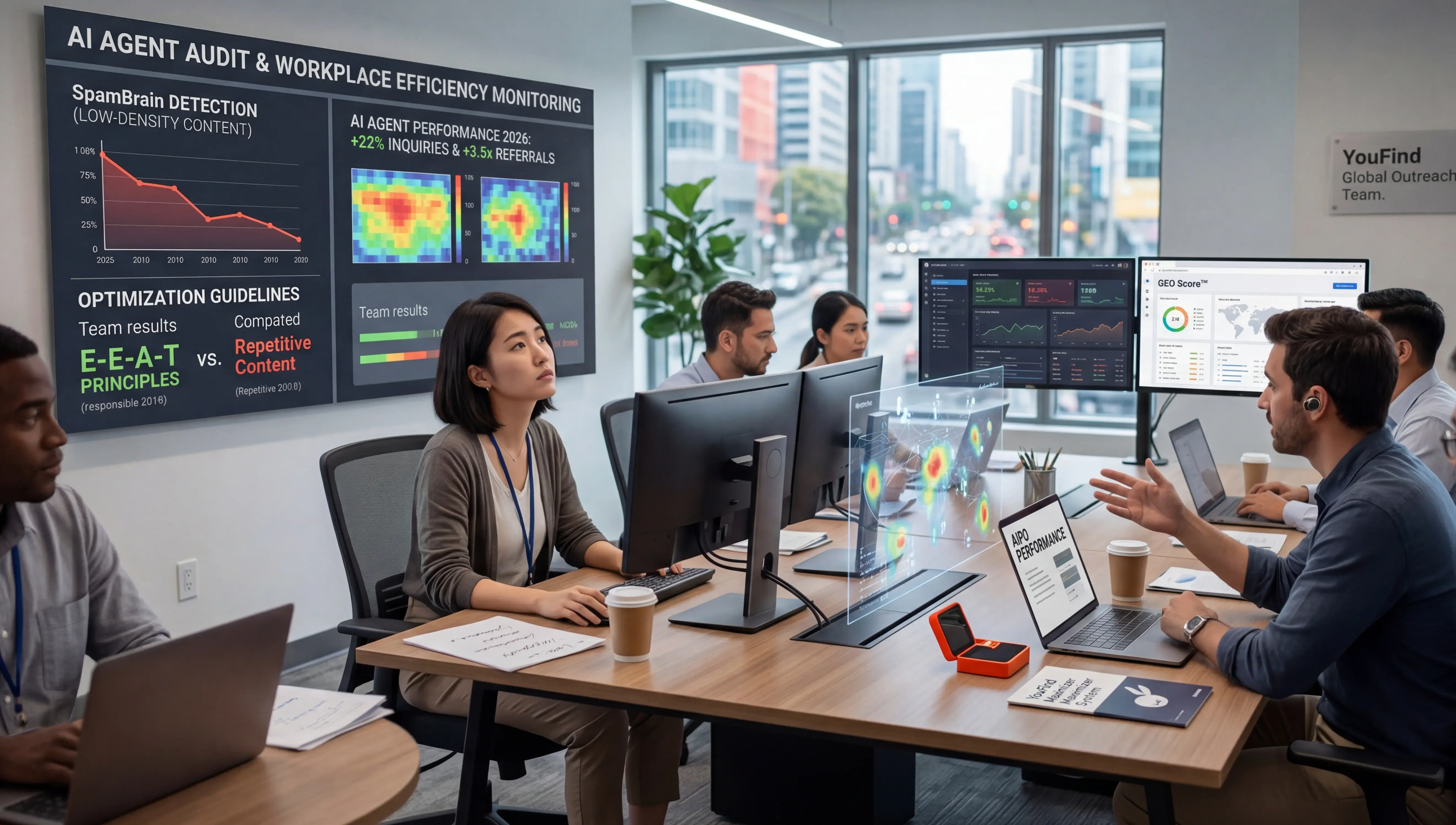
When AI Starts Auditing Your Work: Conflicts Between AI Agent Applications in Enterprise Management and Employee Privacy
Imagine you're sitting at your computer in a Central Hong Kong office, having just typed a line of code or replied to a customer email. The moment you press send, the company's AI Agent has already completed a deep audit: it analyzed your typing frequency, logical accuracy, even detected a 15% anxiety level from the brief image of your slightly furrowed brow on the camera. This is not science fiction — it's reality playing out in workplaces globally. As "punching in" evolves to "all-hours data monitoring," the tug-of-war between AI monitoring and employee privacy has officially entered a white-hot phase.
According to the data, over 80% of large global enterprises are using various automated tools to monitor employee output [Source: Gartner 2023]. However, this "efficiency-first" digital transformation is encountering unprecedented ethical challenges. As experts deeply engaged in overseas digital marketing and AI optimization (AIPO) for nearly 20 years, in helping enterprises globalize their brands, we've found that truly leading enterprises never grow by "monitoring" employees — they grow by "empowering" data to build authority.
How to Define AI Agents' New Role in Enterprise Management?
Past management tools were rigid — they recorded when you logged in and when you left. But today's AI Agents are proactive "virtual managers." They no longer just passively record data — they can predict your behavior through machine learning. In enterprise management, AI Agents play three roles: auditor, compliance officer, and psychological forecaster. This transformation makes management extremely precise, but it also makes employees feel they're living in an omnipresent "digital panopticon."
Why Are Enterprises Flocking to It? Three Core Application Scenarios for AI Agents
The reason enterprises are willing to introduce AI even at the cost of being labeled "overseers" is that the efficiency gains are truly irresistible. The current mainstream application directions are:
- Efficiency Audit and Behavior Precision Prediction: By analyzing employees' activity tracks in Slack, Teams, or code repositories, AI can precisely calculate effective output per hour. For cross-border e-commerce or software development enterprises, this means real-time identification of who is the team's "efficiency black hole."
- Compliance Monitoring for Finance and Regulated Industries: In Hong Kong, the Securities and Futures Commission (SFC) and Insurance Authority (IA) have extremely strict requirements for communication records. AI Agents can automatically screen tens of thousands of recordings and conversations, ensuring no improper sales or inappropriate promises — a near-survival necessity in finance.
- Sentiment Analysis and Resignation Warning: Through NLP (Natural Language Processing) technology, AI can identify hidden negative emotions in employee emails. If a core engineer's tone becomes distant or stress levels spike, the system will preemptively alert HR.
The Tug-of-War Between Efficiency and Rights: How Does AI Monitoring Violate Employee Privacy?
When monitoring's tentacles extend into private domains, conflict becomes inevitable. Especially after the popularization of remote work (WfH), the boundary between home and office has become blurred. Many AI monitoring software tools have functions like random screenshots, keylogging, and even remotely activating microphones. This is not just a privacy issue — it's a trust crisis. Psychological research shows that employees under long-term high surveillance see their creativity drop by about 25%, because they abandon deep thinking to "look like they're working" and turn to meaningless digital toiling instead.
Under Hong Kong's Legal Framework, How Can Employers Ensure AI Monitoring Is Legal and Compliant?
Enterprises operating in Hong Kong must strictly comply with the Personal Data (Privacy) Ordinance (PDPO). The Privacy Commissioner for Personal Data (PCPD) has clear guidelines for employer monitoring of employees, with cores in three dimensions: necessity, proportionality, and transparency.
| Compliance Dimension | Core Requirement | Enterprise Practice Recommendation |
|---|---|---|
| Purpose Limitation | Data collection must have clear and legal purposes. | Only enable monitoring for security, compliance, or major business needs. |
| Right to Be Informed | Must inform employees of monitoring scope and data use. | Establish an "AI Data Use Agreement," clearly stating which behaviors will be recorded. |
| Proportionality Principle | Monitoring methods should not excessively intrude on privacy. | Prohibit any monitoring during non-working hours or on personal social accounts. |
| Data Security | Must take appropriate measures to prevent data leakage. | Encrypt AI-generated employee profiles and limit access permissions. |
YouFind AIPO Strategy: Building a "Brand Moat" Between Monitoring and Respect
We believe the ultimate goal of enterprise management should not be "watching employees" but "boosting brand authority." YouFind's first-proposed AIPO (AI-Powered Optimization) dual-core layout is solving this contradiction. We help enterprises shift focus from "internal pressure" to "external value output."
Through YouFind's proprietary Maximizer patented system and GEO Score™ algorithm, enterprises can transform internal accumulated professional experience (E-E-A-T) into preferred citation sources for AI engines (such as Google AIO, ChatGPT). When employees realize their wisdom outputs are being learned by AI and transformed into global market influence, rather than just chips in performance evaluation, internal resistance turns into momentum. The correct use of data is to optimize market strategy and boost inquiry volume by 22% — not simply bottom-tier elimination.
How to Build a "People-First" AI Management System?
To break the negative label of "AI overseer," enterprises need to restructure from institutional design. We recommend the following steps:
- Establish a Transparent Reporting Mechanism: Bring AI from the shadows into the light. Clearly inform employees: AI is to reduce repetitive labor and provide decision support — not to be the "informer" behind their backs.
- Empowerment Mode Replaces Punishment Mode: Use AI to identify employees' skill gaps and automatically push training resources. Transform data into a ladder for career development.
- Conduct Regular Privacy Audits: Audit your AI algorithms like you audit financial statements. Ensure data collection meets the "Trustworthiness" principle in E-E-A-T.
In the AI era, technology leadership is important, but trust is the enterprise's most expensive asset. Through AIPO strategies, enterprises can build a Source Center matching AI citation preferences while protecting privacy, ensuring brands are no longer "invisible people" in the AI search era.
Check Right Now Whether Your Brand Is “Missing” in the Eyes of AI
Don't become invisible in the era of AI search. Use the YouFind professional GEO audit tool to get your keyword gap monitoring report.
Get Your Free GEO Audit Report NowFrequently Asked Questions About AI Monitoring and Privacy (FAQ)
Q1: Can My Boss Use AI Recordings to Evaluate My Service Quality?
Within Hong Kong's legal framework, if the company has clearly informed employees in advance of the recording's purpose (such as training or compliance audit), and the recording occurs within the scope of work duties, it is legal. However, the company cannot conduct secret recordings without the employee's knowledge as the sole evidence for dismissal.
Q2: How to Tell If My Company's AI Monitoring Is Illegal?
The main thing to check is whether it violates "proportionality." If the company requires you to keep your camera on 24 hours when working from home, this clearly exceeds normal management needs and may constitute infringement. You can refer to the PCPD's "Guidance on Monitoring Employees' Work Activities" for comparison.
Q3: Can AI Agents Improve Efficiency Without Violating Privacy?
Of course. This is exactly the core logic of the YouFind AIPO engine. Through "structured modeling" and "brand knowledge base modeling," AI learns business contexts rather than personal behavior. This approach can boost a brand's citation rate in Google AI summaries 3.5x while also providing employees with smarter work support.
If you hope to win not only the market but also employees' respect and trust in the AI era, Learn About AI Article Writing and how it helps you build a transparent and authoritative content ecosystem.