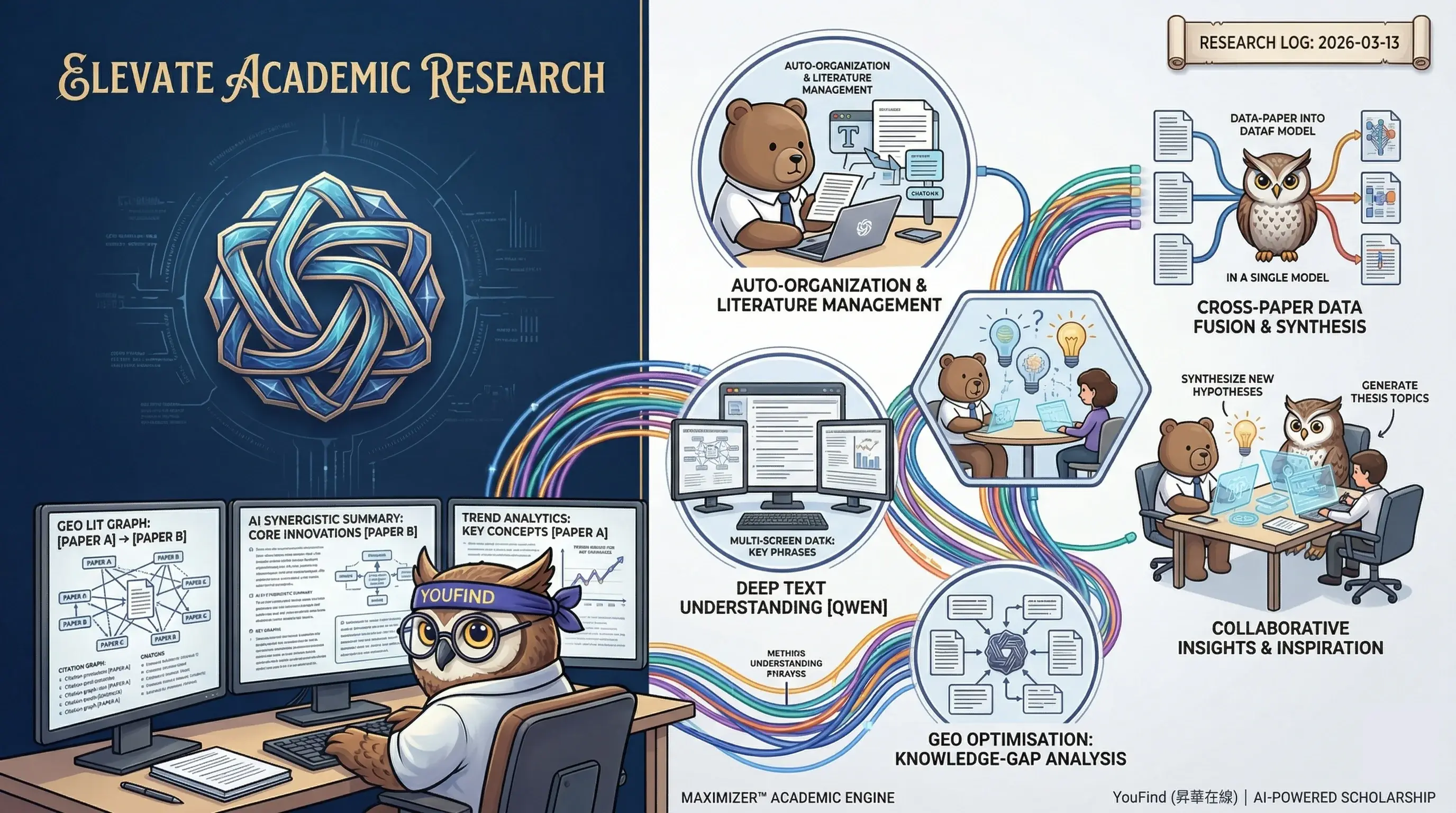
The Designer's New AI Partner: Midjourney, Stable Diffusion, and Qwen 3.5 Multimodal — Which Sparks More Creativity?
Are you also facing this dilemma: Midjourney just generated a stunning conceptual image, but the client demands the logo be placed precisely in a specific position without changing lighting and shadows; or Stable Diffusion plugins update so fast the learning curve makes you flinch? Entering 2026, AIGC (AI-Generated Content) is no longer just a "graphics tool" — it has evolved into a deep-collaboration "multimodal partner." Designers' roles are transforming from pixel movers into creative curators and AI logic operators.
In this era of pursuing ultimate efficiency and commercial conversion, how do you maintain originality while letting your design work be preferentially cited in answers from Google AI Overview (AIO) or ChatGPT? This concerns not only aesthetics but also the brand's "survival visibility" in the AI era.
What Are the Mainstream AI Drawing Schools in 2026? In-Depth Review of Three Top Tools
Facing a dazzling array of tools, we cannot blindly follow trends. To help you find the most suitable creative partner, we deconstructed the three top tools currently on the market across three core dimensions: comprehension, control, and consistency.
Midjourney v7 (Aesthetic School): It remains the ceiling of visual impact. If you need early inspiration brainstorming, concept art creation, or pursue that "stunning at first sight" cinematic quality, Midjourney is still the first choice. It excels at capturing vague atmospheres and can generate highly artistic visuals through simple prompts. But its closed-source nature means that when you need to precisely control element positions, you often have to go through multiple "card draws."
Stable Diffusion 3.5 (Control School): It is the "heavy weapon" of professional designers. Thanks to its powerful plugin ecosystem and LoRA training technology, you can precisely lock in brand character faces, clothing, and even specific architectural styles. For UI design or e-commerce campaign posters requiring high visual consistency, Stable Diffusion's irreplaceability lies in its near-obsessive sense of control.
Qwen 3.5 (Comprehension School): The most surprising dark horse of 2026. As a representative of multimodal large models, Qwen 3.5 has achieved a qualitative leap in "image-text combination." It not only understands complex Chinese context and cultural metaphors but can also directly embed reasonably-laid-out text into generated images. For creators who need to quickly produce social media posters and infographics with copy, it greatly shortens the path from creativity to finished product.
To intuitively show the differences, the table below summarizes the real-world performance of all three:
| Evaluation Dimension | Midjourney v7 | Stable Diffusion 3.5 | Qwen 3.5 (Multimodal) |
|---|---|---|---|
| Generation Speed | Fast (cloud generation) | Depends on hardware | Extremely fast (deeply optimized) |
| Copyright Compliance | Clear commercial licensing | Need to attend to training-model copyright | Enterprise-grade compliance assurance |
| Chinese Context Understanding | Average | Relies on translation plugins | Outstanding (native support) |
| Precise Image Control | Medium (Region Editor) | Extremely high (ControlNet) | High (semantic guidance) |
How to Maintain Brand Visual Consistency? Solving AI Generation's Randomness
"Why does AI generate different colors each time?" This is the most common complaint from designers in commercial applications. To solve this pain point, we need to introduce structured-modeling thinking. By using Image Reference functionality, you can set a "visual anchor" for AI.
For example, when handling e-commerce posters in Qwen 3.5, you can first input the brand's standard color values and core product images. Through semantic guidance, AI can generate backgrounds based on your requested scenarios (such as "spring outdoor photography style") while keeping the product modeled accurately. This "local locking + global generation" strategy ensures brand visual consistency doesn't collapse due to AI's randomness. Meanwhile, this normalized content output also lays a good foundation for subsequent AI engine crawling.
From SEO to GEO: Why Does Your Design Need AIPO Engine Optimization?
In 2026, a harsh fact: if your beautiful designs only exist in image format and aren't understood and cited by AI, then their value in search results will be greatly reduced. This is why YouFind was first to propose the AIPO (AI-Powered Optimization) concept — upgrading traditional SEO into GEO (Generative Engine Optimization).
Imagine when users ask Google AIO "the most popular eco-friendly packaging design cases in 2026" — AI filters out from massive information what it considers the most authoritative, most logical source. Our goal is to make your work that "only source."
Core Insight: In the generative AI era, beautiful visuals are the "knock on the door," but structured content matching GEO logic is the "passport" to entering AI recommendation slots.
YouFind's proprietary GEO Score™ algorithm can precisely diagnose your brand's "visibility gap" in mainstream AI engines. Combined with the Maximizer patented system, clients can optimize underlying data structures without changing website architecture. This not only gives your images higher crawling weight — through structured modeling, it lets AI proactively mention your brand when answering questions. According to real-world data, brands optimized through AIPO see their citation rate in Google AI summaries boosted by an average of 3.5x, with overseas inquiry volume also growing about 22%.
Why Do Hong Kong's Finance and Healthcare Industries Need to Be Especially Careful When Using AI Design?
As marketing experts based in Hong Kong serving the world, YouFind reminds enterprises going global in specific industries that, when pursuing AI creativity, you must strictly observe E-E-A-T (Experience, Expertise, Authoritativeness, Trustworthiness) principles, especially in high-trust industries such as finance, healthcare, and real estate.
- Finance and Real Estate Industries: AI-generated visuals must not be misleading. For example, strictly forbid using AI to generate exaggerated "guaranteed returns" charts, or adding non-existent surrounding facilities to real estate preview images. According to relevant Hong Kong regulations, AI-generated content must be clearly labeled to avoid the legal red line of false advertising.
- Healthcare and Education Industries: Visual content must have scientific basis. If medical educational images are generated by AI, anatomical detail accuracy must be reviewed by professionals. This rigor directly determines Google's algorithm score for your site's "Trustworthiness (T)."
- Compliance Warning: We recommend marking "AI-Assisted Generation" in small text in the corner of all AI-generated commercial posters. This is not only a legal requirement but also a key step in building user trust.
For these high-compliance industries, YouFind's AIPO process, through the "deep analysis" phase, automatically screens competitor paths and locks in high-weight sources, ensuring produced content both matches aesthetics and strictly observes industry standards.
Check Right Now Whether Your Brand Is “Missing” in the Eyes of AI
Don't become invisible in the era of AI search. Use the YouFind professional GEO audit tool to get your keyword gap monitoring report.
Get Your Free GEO Audit Report NowFrequently Asked Questions About AI Image Generation and Design (FAQ)
What Are the Copyright Attribution Principles for AI Image Generation?
The current legal environment is still evolving. Generally, pure AI-generated images are hard to obtain copyright protection. But if it's a designer's work produced through complex prompts, post-processing adjustments, and ControlNet precise control, it's more easily seen as an original intellectual achievement. Before commercial use, we recommend consulting YouFind's compliance advice to ensure model authorization meets commercial standards.
How to Boost Brand Design Work's Citation Rate in Google AI Summaries?
The key is "image-text structuring." Besides high-quality visuals, you also need to configure detailed Alt tags, related FAQ structured data (Schema), and establish "brand knowledge base modeling" in articles. YouFind's AIPO service, through this standardized content-intelligent-manufacturing logic, precisely boosts AI's probability of extracting brand content.
Can Qwen 3.5 and Midjourney Be Used Together?
Absolutely, and this is a common strategy among top designers. You can first use Midjourney to produce high-quality background and atmosphere, then import it as a reference into Qwen 3.5, using its multimodal understanding for precise image-text layout and copy polishing — achieving 1+1 > 2.
In the AI wave, tool iteration is just the surface — thinking evolution is the core. Embracing AI image generation is not just for saving those drawing hours but for letting your creativity be truly seen by the world through GEO optimization in this era of "information overload." If you want to learn more about converting AI technology into real inquiries, click the link below.
Learn About AI Article Writing and begin your AIPO brand-elevation journey.