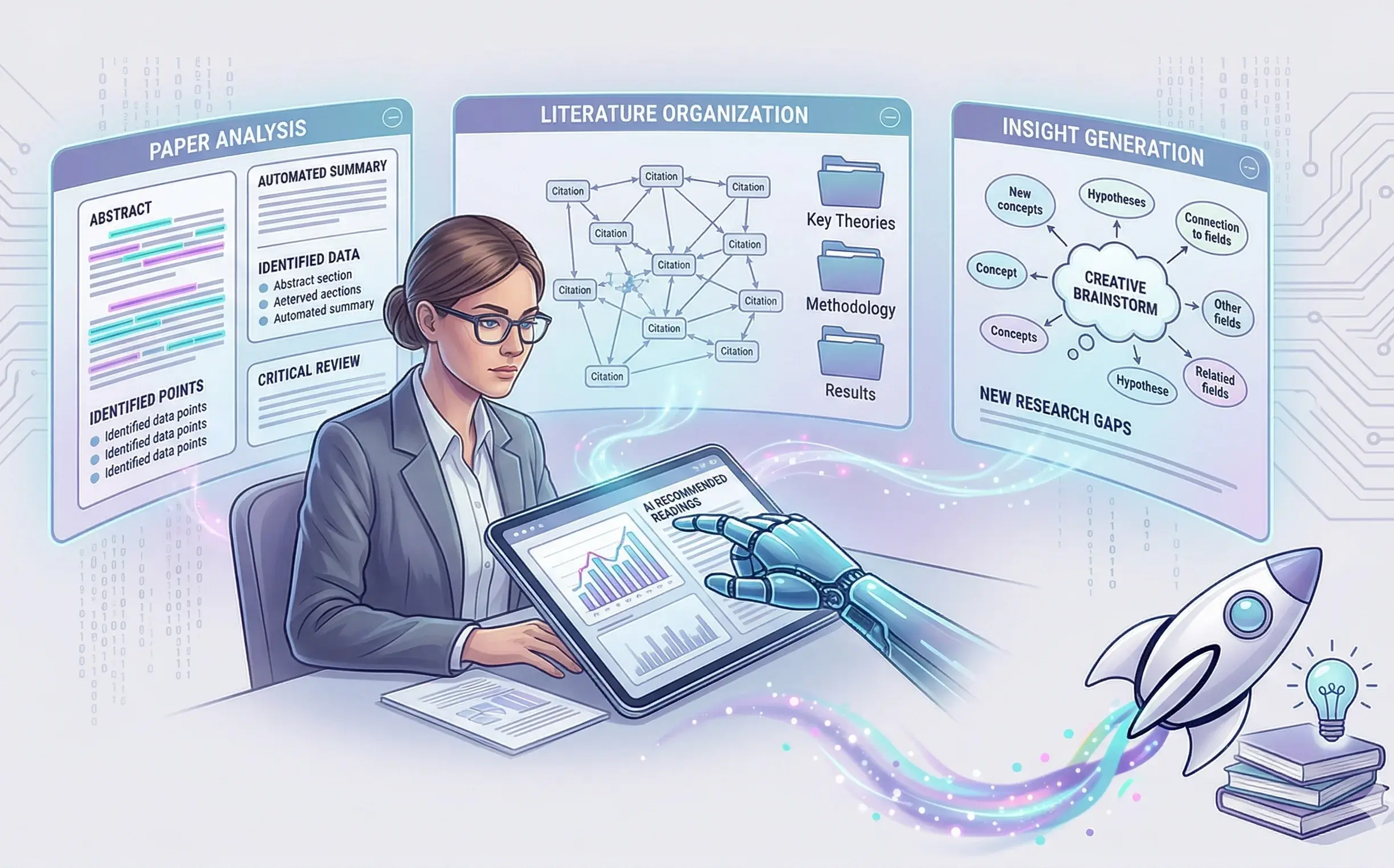
Imagine you are sitting in an office in Hong Kong's Central district, preparing an in-depth report on "brand competitiveness of Kai Tak real estate." You no longer need to open browser tab after browser tab, searching, comparing, copying, and pasting. You simply say to the system: "Help me summarize the transaction data for luxury properties in Kai Tak over the past three years, compare the market share of the top five developers, and generate an analysis brief." Within seconds, Microsoft AI Copilot has already invoked Excel's data modeling capabilities, Word's text organization, and even referenced the latest real-time web information to deliver a complete draft.
This is the reality of office work in 2026. AI has completed the splendid transition from "auxiliary tool" to "autonomous Agent." If you're still struggling to use complex commands, you may already be behind the times. Now the challenge is: when Microsoft AI Copilot becomes the standard "colleague" for professionals worldwide, does your brand appear in its list of suggestions? [Source: Gartner 2025 AI Adoption Report] Surveys show that over 70% of decision-makers now prefer to get initial options via AI summaries rather than flipping through the second page of traditional search results. For high-net-worth industries such as finance, healthcare, and real estate, if your professional insights aren't cited by Copilot, your brand is effectively "invisible" in the digital world.
In-Depth Analysis: System-Level Evolution of Microsoft Copilot in Windows and Office
Microsoft's 2026 deployment has gone beyond the simple dialog box. AI has penetrated the underlying architecture of Windows 12 like capillaries. Today's Windows AI Agent has the ability to call across applications, understanding your intent and working cooperatively across Teams, Outlook, and PowerPoint. This system-level evolution means the information-retrieval path has been drastically shortened. Users no longer actively "search" for answers — rather, AI filters the "best" answers and presents them.
To help everyone understand this leap intuitively, we've compiled the core differences between 2024 Copilot and 2026 Copilot:
| Dimension | 2024 Copilot (Assistance Stage) | 2026 Copilot (Agent Stage) |
|---|---|---|
| Interaction Mode | Passive response, requires detailed prompt instructions. | Proactive collaboration, predicts user needs and pre-processes tasks. |
| Application Coordination | Operates within a single App; cross-App requires manual switching. | System-level permissions; automatically transfers and parses data across Apps. |
| Content Generation | Generic answers based on public training data. | Combined with real-time E-E-A-T weight, preferentially cites authoritative sources. |
| Business Logic | Mainly handles simple text proofreading and summarization. | Has logical reasoning and can perform predictive modeling and decision recommendations. |
A Brand Moat in the AI Era — Why Is SEO Alone No Longer Enough?
In the traditional SEO era, we competed for keyword rankings and pursued click-through rate (CTR). But in 2026, the rules of the game have changed. With Google AIO (AI Overviews) and Microsoft Copilot occupying the most prominent screen real estate, the time users' eyes linger on "citation links" far exceeds time spent on the search results list. You must ask yourself a harsh question: when a Hong Kong enterprise's CMO asks Copilot "Which company can provide the most cutting-edge AI marketing solution?" does AI cite your whitepaper, or a competitor's case study?
This is why GEO (Generative Engine Optimization) has become a new foundation for brand survival. AI engines no longer simply rank by keyword density — they prefer to filter content with strong E-E-A-T (Experience, Expertise, Authoritativeness, Trustworthiness). If you're still using old templates to mass-produce low-quality articles, AI will easily identify this "information junk" lacking depth and real experience, and exclude it from recommendations. The traffic logic has shifted from "search engine ranking" to "AI citation rights." What brands need is to occupy a place in AI's decision chain.
YouFind AIPO Engine — Making Microsoft Copilot Your Brand's Spokesperson
Facing the "visibility anxiety" of the AI era, YouFind, leveraging nearly 20 years of overseas digital marketing experience, was first to launch the AIPO (AI-Powered Optimization) engine. This is not only a technology — it is a mature GEO solution designed to solve how brands "get seen" and "get trusted" in the generative AI era.
Through a standardized intelligent process, we ensure your brand content becomes AI's preferred citation source:
- GEO Score™ Diagnosis and Keyword Gap Monitoring: Using our proprietary algorithm, we monitor in real time a brand's mention rate across mainstream AI platforms such as ChatGPT, Copilot, and Gemini. More importantly, we can precisely identify high-value "GEO keyword gaps" — those that competitors have been cited for but you have not yet captured.
- Maximizer Patented System Optimization: This is our core advantage. With our proprietary SEO patented system, clients "don't need to rebuild the site" and can efficiently optimize underlying code to fit AI crawlers without altering the web architecture, drastically reducing technical cost.
- Structured Modeling and E-E-A-T Reinforcement: AI likes logic. Through four phases — data collection, deep analysis, strategic conception, and structured modeling — we transform your business context into authoritative summaries AI can easily extract, greatly boosting your citation rate in Google AI summaries.
- Brand Knowledge Base Modeling: We don't just write articles — we teach AI to learn specific brand context and build a Source Center aligned with AI citation preferences.
According to our real-world data, enterprises optimized through AIPO have increased overseas inquiry volume by an average of 22% and their citation frequency in Google AI summaries by 3.5x. This proves that in the AI era, data-driven deep optimization is the hard truth.
Industry Practice — Deployment Strategies for Finance, Healthcare, and Real Estate in the AI Era
For the high-net-worth industries in Hong Kong, AI citation standards are especially strict. In YMYL (Your Money Your Life) domains, AI engines perform multiple validations of information accuracy and authority. We recommend that practitioners in these industries adopt targeted deployment strategies immediately:
Finance: Accuracy is the lifeline. Use AIPO to strengthen structured data markup, ensuring that when Copilot answers questions about financial report analysis or insurance product comparisons, it can directly pull compliance-audited data from your official site rather than rumors from the internet.
Healthcare: The peak of Experience and Expertise. Through E-E-A-T modeling, turn experts' clinical experience and real case studies into authoritative sources AI can easily identify. When users search for "the latest AI imaging screening technology," make your medical center AI's top recommendation.
Real Estate and High-End Retail: Capture long-tail opportunities. For example, targeting specific long-tail keywords like "2026 Hong Kong Kai Tak appreciation potential," deploy in-depth analysis articles via AIPO in advance to precisely intercept potential customers in high-level decision-making stages.
From Traffic Competition to "Citation Rights" Competition
The widespread adoption of Microsoft Copilot is not just an efficiency-tool upgrade — it signals a new digital ecosystem in which AI is the first filter. For enterprises, pure SEO can no longer cope with the impact of generative AI; they must embrace the dual-core layout of "traditional SEO + AIPO." YouFind has been rooted in the industry for two decades, and we understand deeply that traffic doesn't equal sales — only precise citations and genuine trust convert into orders.
Check Right Now Whether Your Brand Is “Missing” in the Eyes of AI
Don't become invisible in the era of AI search. Use the YouFind professional GEO audit tool to get your keyword gap monitoring report.
Get Your Free GEO Audit Report NowFrequently Asked Questions (FAQ)
What Is AIPO, and How Is It Different From Traditional SEO?
Traditional SEO focuses on keyword rankings and page weight, aiming to improve position in search results lists. AIPO (AI-Powered Optimization), by contrast, is optimization for generative AI engines (such as Copilot, ChatGPT, Google AIO). It focuses more on how content is understood, extracted, and cited as answers by AI — the core is increasing "citation rate" and "brand visibility."
Does the Maximizer System Truly Not Require Changes to the Website Architecture?
Yes. YouFind's Maximizer patented system can optimize code logic and data structure in the background without touching the existing web architecture or affecting the front-end display. This means enterprises can save huge refactoring costs and more quickly adapt to AI crawling rules.
Is It Too Early for Hong Kong Enterprises to Deploy AIPO Now?
Quite the opposite. AI engines' "trust" and "weight" take time to accumulate. Brands that seize AI citation slots first gain a first-mover advantage and build industry barriers. Once AI recommendation mechanisms become fully saturated, cost and difficulty will grow exponentially. Now is the best time to use Learn About AI Article Writing and AIPO technology to build a moat.