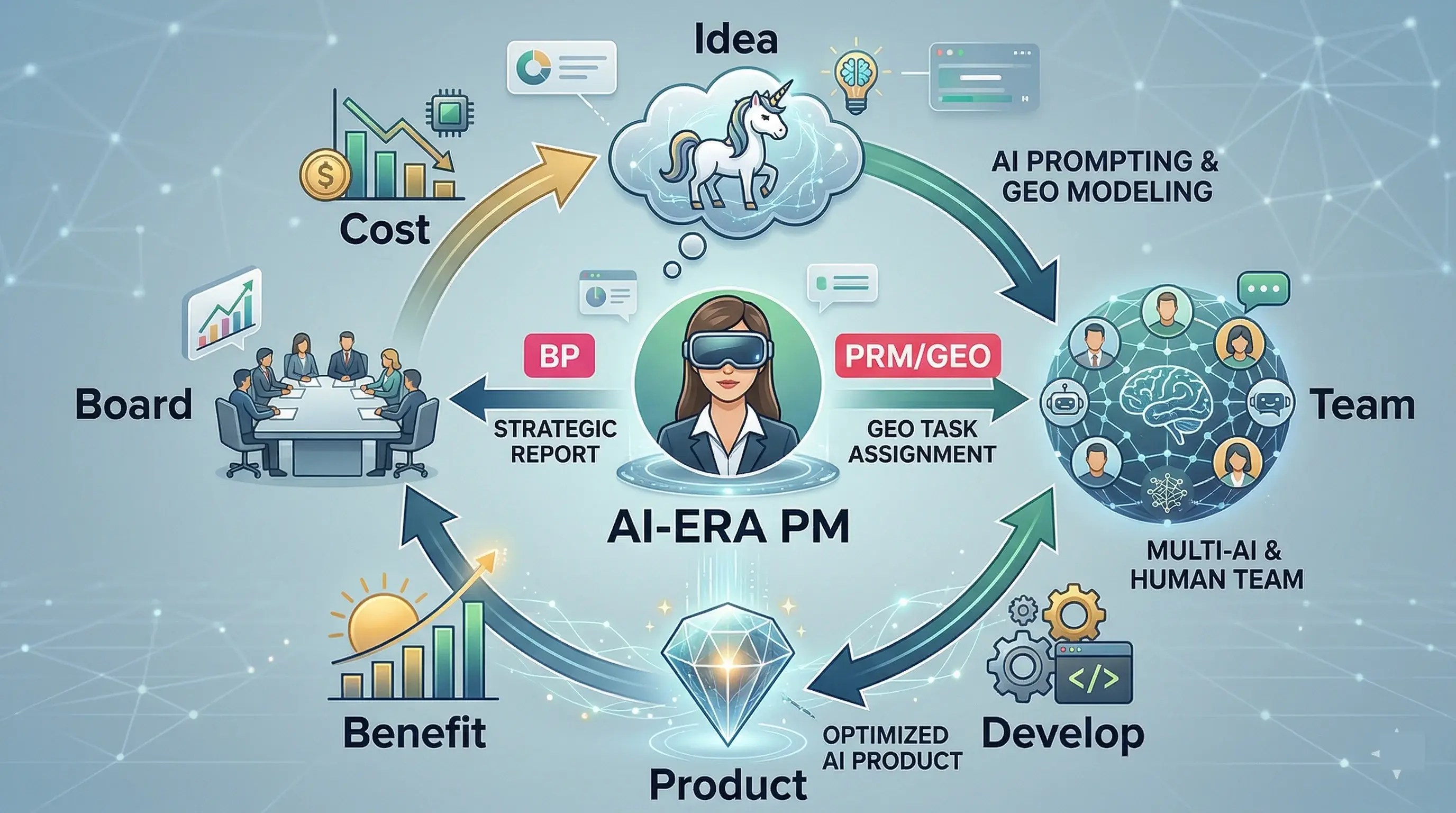
"If I don't learn Python, will I be eliminated by AI?" This is the most frequent anxiety I see on Chinese-American tech forums and professional social platforms in North America. Especially for product managers (PMs) with engineering backgrounds in Silicon Valley or Seattle, and for cross-border e-commerce practitioners in China seeking to go global, the explosion of large models seems to be blurring the boundary between technology and product. However, according to a 2023 McKinsey study, AI automation will take over about 60% to 70% of employees' work time globally. This means that for product managers, your core value is shifting from "how to implement features" to "how to define problems."
In Hong Kong and overseas markets, the pain point of enterprise transformation is no longer finding developers but how to gain brand exposure in generative engines such as Google AIO (AI Overviews) and ChatGPT. YouFind, with 20 years of deep experience in overseas marketing, has found that traditional SEO ranking logic is evolving into AIPO (AI-Powered Optimization). Future PMs don't need to write code themselves, but they must understand how to make AI algorithms "fall in love with" your brand content, building a brand moat in the AI era.
Myth Busted: Do Product Managers Still Need to Master Low-Level Code?
Many international students entering the workplace or content creators in career transition believe that without mastering the underlying architecture, they cannot manage AI products. In fact, with the spread of AI Agents and Low-code platforms, the development barrier has been drastically lowered. Experts believe that a product manager's "technical background" is essentially technical understanding rather than development ability. You need to understand the input/output logic of Large Language Models (LLMs), token costs, and the basic principles of API calls — but that doesn't mean you need to optimize sorting algorithms. Your technical vision should be on assessing feasibility of solutions, not wrestling with semicolons and brackets. Rather than grinding on LeetCode, study how to use the AIPO engine to diagnose your brand's visibility gaps in generative search.
Reshaping the Skill Tree: Three Core Hard Skills for Product Managers in the AI Era
In the AI-driven ecosystem, the PM role becomes more like a "logic architect." Here are the three hard-core skills that will determine your competitiveness over the next five years:
- Problem Definition and Prompt Engineering Logic: This ability aligns completely with search intent analysis in traditional SEO. You need to precisely capture user pain points and translate them into structured instructions AI can understand. This is not just chatting with AI — it is guiding AI through logical modeling to produce high-quality business decisions.
- Data-Driven and AIPO Diagnostics: Modern PMs must learn to use the GEO Score™ algorithm for AI visibility diagnosis. This means monitoring your brand's citation rate across mainstream AI engines (such as ChatGPT, Copilot, Perplexity) and analyzing which high-value "GEO keyword gaps" competitors have occupied.
- Human-AI Collaboration Workflow Design: Knowing the product doesn't mean knowing "content intelligent manufacturing." You need to master how to transform brand advantages into data structures that AI prefers. Through the four standard stages of data collection, deep analysis, strategic conception, and structured modeling, ensure your brand content becomes AI's preferred citation source when answering questions.
From SEO to GEO: Why Must Product Managers Deploy AI Citation Slots?
In North America and Hong Kong, Google AIO has already changed the rules of traffic distribution. When a user asks a question, Google directly generates a summary. If your brand doesn't appear in the citation sources of that summary, you'll lose 80% of precise traffic. This is why PMs need to master GEO (Generative Engine Optimization). Compared with traditional SEO, GEO emphasizes Authoritativeness and Trustworthiness of content.
The table below shows the essential differences between traditional search optimization and generative engine optimization in product strategy:
| Dimension | Traditional SEO | GEO (Generative Engine Optimization) |
|---|---|---|
| Core Goal | Improve blue-link ranking on the Search Engine Results Page (SERP) | Boost citation share and positive recommendation frequency in AI summaries |
| Content Form | Keyword stuffing, long articles, meta-tag optimization | Structured data, Q&A pairs, summaries with deep insight |
| Technical Path | Site architecture, internal linking, backlinks | AIPO Engine, brand knowledge base modeling, source tracking |
| Metric | CTR, bounce rate, ranking position | GEO Score™, AI mention rate, attribution analysis |
For many PMs worried about cost, YouFind's proprietary Maximizer System offers an ideal solution: it allows clients to optimize efficiently "without needing to rebuild the site," injecting structured content that meets E-E-A-T principles directly into the existing web architecture — a huge advantage in the fast-moving cross-border e-commerce and finance sectors.
AIPO Applications for Key Hong Kong Industries and Enterprises Going Global
How can PMs in different industries use AIPO to boost business metrics?
Finance and Healthcare (YMYL Industries)
In YMYL (Your Money Your Life) fields involving money or health, AI engines' review of authority is almost severe. Product managers need to use "structured modeling" to ensure all outputs are accurate and compliant. For example, in Hong Kong financial marketing, we must avoid banned terms like "guaranteed return" and instead use AIPO to build the brand's professionalism in AI's eyes, ensuring that when AI answers "Which Hong Kong financial advisor is the most reliable," it can cite your brand data based on facts. This approach can boost overseas inquiry volume by an average of 22%.
Real Estate and Education
These two industries heavily rely on word of mouth and deep decision-making. PMs should use "content intelligent manufacturing" logic to produce authoritative summaries targeting high-converting commercial keywords. By monitoring competitors' mention rates on AI platforms, PMs can discover new traffic blue oceans in real time and pre-deploy brand Source Centers, teaching AI the specific business context — achieving a 3.5x increase in citation rate within Google AI summaries.
Conclusion: The Product Manager Is the "Content and Logic Architect" of the AI Era
Your career moat in the AI era doesn't lie in how many lines of code you can write — it lies in how you manage brand assets and occupy a leading position in the next generation of search ecosystems. Going from traditional SEO to the dual-core AIPO layout is a required course for every PM committed to brand internationalization and career advancement. You need to use data-driven tools to diagnose brand visibility and transform fragmented information into structured knowledge aligned with AI citation preferences.
As experts who have been deeply rooted in overseas markets for nearly 20 years, YouFind can help you not only seize the first page on Google, but also become the authority cited in ChatGPT and Gemini replies. Don't let your brand become the "invisible person" in the AI era.
Learn About AI Article Writing
Check Right Now Whether Your Brand Is "Missing" in the Eyes of AI
Don't become invisible in the era of AI search. Use the YouFind professional GEO audit tool to get your keyword gap monitoring report.
Get Your Free GEO Audit Report NowFAQ: Common Questions About PM Skills and AIPO in the AI Era
What Is AIPO, and How Does It Affect Product Managers?
AIPO stands for AI-Powered Optimization. It requires PMs to focus not only on webpage rankings but also on how often brand content is cited in generative AI (such as ChatGPT). Mastering AIPO skills helps PMs ensure brand visibility at a time when traffic entry points are being reshaped.
How Do I Boost My Brand's Citation Rate in Google AI Overviews?
The key is to follow Google's E-E-A-T principles and use structured data markup (Schema Markup) to clearly indicate content logic to AI. Using professional GEO diagnostic tools (such as GEO Score™) can precisely identify and fill a brand's information gaps in AI search.
Does AIPO Optimization Require Rebuilding the Website?
No. Through YouFind's proprietary Maximizer patented system, enterprises can perform deep content and structural optimization without changing the existing web architecture, drastically reducing the technical implementation threshold and cost — perfect for product teams that need rapid iteration.